Introduction
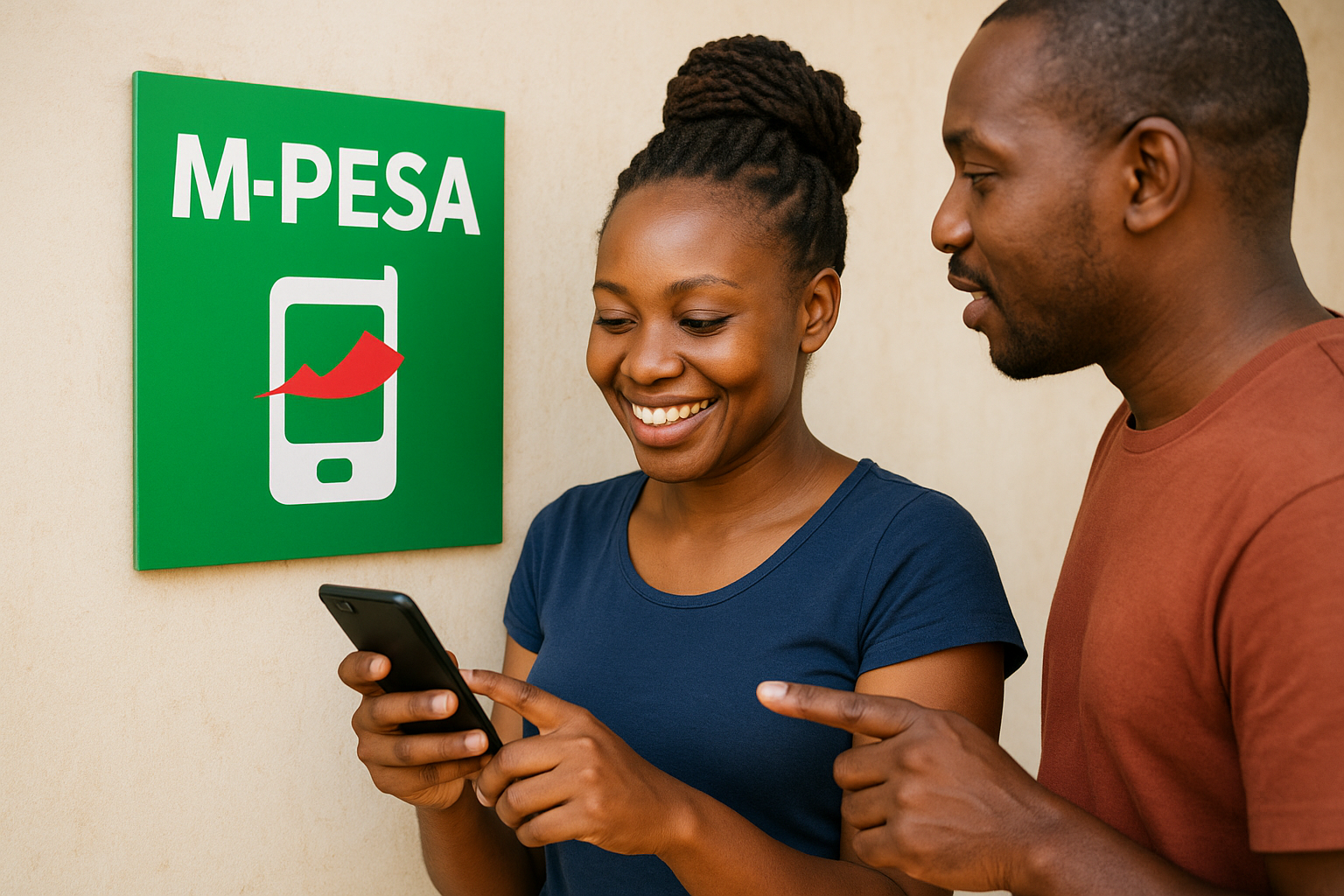
When M-Pesa launched in 2007, few imagined that a simple mobile money service based on SMS technology would fundamentally reshape not only Kenya’s financial system but also the global understanding of mobile banking. What began as a modest tool to allow ordinary Kenyans to send money home quickly evolved into one of the most celebrated mobile-money platforms in the world. Beyond its technological innovation, M-Pesa’s success lies in its social, economic, and human impact. It has transformed lives, enabled businesses, and created financial opportunities for millions who had previously been excluded from formal banking systems. Today, M-Pesa is not only studied in universities as a model of fintech innovation but is also a benchmark for other nations seeking to address financial inclusion. Its story demonstrates that innovation can thrive anywhere in the world when it is rooted in a deep understanding of local challenges and human needs.
1. The Problem Before M-Pesa
Before the arrival of mobile money, financial transactions in Kenya were slow, risky, and often inconvenient. For a rural family wanting to send money to a loved one in another town, the process was fraught with uncertainty. Bus conductors or matatu drivers were commonly trusted to deliver envelopes containing cash, but there was always the risk of theft, loss, or delay. The banks that existed were concentrated in major urban areas, leaving most rural communities with limited access. For those who could reach a bank, the process was cumbersome, involving paperwork, long queues, and transaction fees that many could not afford.
Statistics from that period reveal the scale of the challenge: over 75% of Kenyans were unbanked, meaning they had no access to formal financial services. Families often had to wait days or even weeks to receive small but critical amounts of money needed for school fees, healthcare, or emergencies. Farmers had to travel long distances to receive payments for their produce, wasting both time and resources. The existing financial system was effectively designed for a minority who already had resources and access, while the majority remained excluded. Kenya needed a solution that was not only fast, affordable, and secure, but also accessible through a device nearly everyone already owned: a mobile phone.
Key challenges included:
-
Lack of access to banks in rural areas
-
Reliance on unreliable informal money transfer methods
-
Long waiting times for critical payments
-
High transaction fees and paperwork
-
Majority of population excluded from formal financial services
2. The Birth of an Idea
Recognizing this widespread need, Safaricom, in collaboration with Vodafone, explored a groundbreaking question: “What if money could move as easily as an SMS?” With funding and technical support from the United Kingdom’s Department for International Development (DFID), they began developing a simple, low-cost system that could allow people to send, receive, and store money digitally using basic mobile phones.
The pilot program, initially tested with a small group of users, yielded extraordinary results. People adopted it quickly because it directly addressed their everyday challenges. Unlike traditional banking, M-Pesa was designed to be simple, accessible, and practical. It was not about flashy technology or complex features; it was about solving a real problem. By enabling instant money transfers, M-Pesa gave users a sense of dignity, control, and empowerment. They could now support family members, pay bills, and conduct business transactions without depending on unreliable or inaccessible financial infrastructure.
Highlights of the solution included:
-
Simple SMS-based transactions
-
No bank account required
-
Accessible on basic mobile phones
-
Instant money transfers
-
Empowerment for users in daily financial activities
3. 2007: The Turning Point
The post-election crisis of 2007 presented the first major test for M-Pesa. Kenya was in political turmoil, with widespread violence, roadblocks, and bank closures. Movement became dangerous, and accessing cash was nearly impossible. Yet, mobile networks remained operational, and M-Pesa emerged as an essential lifeline.
During this period, people relied on M-Pesa to send money to relatives for food, transportation, and medical needs. What had started as a convenient service suddenly became indispensable. Millions of Kenyans joined the system, attracted by its ease of use, security, and reliability. Key features such as no requirement for a bank account, compatibility with basic phones, a nationwide agent network, and near-instant transactions made M-Pesa uniquely suited to the challenges of the time. It was not just a technological innovation; it was a social safety net, providing a critical lifeline to people navigating an uncertain and dangerous environment.
Key features that enabled rapid adoption:
-
Nationwide network of agents
-
Instant transactions
-
Operated on basic phones without internet
-
Provided security and reliability during crisis
4. Transforming Everyday Life
M-Pesa’s impact on everyday life has been profound, touching families, businesses, and the broader economy.
For families, it meant immediate access to financial support. Parents could pay school fees or provide emergency assistance to children studying in distant towns. Families could save money securely without relying on unsafe methods like hiding cash under mattresses or in tin boxes.
For businesses, M-Pesa revolutionized operations. Small and medium enterprises could pay suppliers and staff instantly, improving efficiency and reducing reliance on bank loans or physical cash. Individual entrepreneurs, street vendors, and informal traders could expand their operations without access to formal banking or point-of-sale systems. Farmers received payments digitally, avoiding long and costly trips to urban centers.
At the national level, the effects were equally transformative. Financial inclusion rose dramatically, from roughly 26% of the population in 2006 to over 80% today. Digital transactions increased transparency, reduced opportunities for corruption, and brought billions of shillings into the formal economy that would otherwise have remained hidden in cash. M-Pesa didn’t just digitize money; it democratized financial access and strengthened the economic fabric of the nation.
Key benefits included:
-
Instant school fee and bill payments
-
Emergency financial support from anywhere
-
Secure savings options
-
Efficient business transactions
-
Strengthened transparency and economic growth
5. The Innovation Ecosystem
M-Pesa’s success created a ripple effect, leading to the emergence of an entire ecosystem of financial services built on mobile money. Services such as M-Shwari provided savings accounts and micro-loans, while KCB M-Pesa offered mobile banking solutions that expanded access to formal financial services. Lipa na M-Pesa allowed merchants and shops to accept payments digitally, revolutionizing commerce at every level. Government services such as KPLC electricity tokens, NHIF contributions, eCitizen services, and county-level payments became easier to access.
Today, a single mobile phone in Kenya can facilitate almost every aspect of financial life: paying bills, buying goods and services, borrowing loans, receiving salaries, paying public transport fares, and shopping online. What began as a simple money transfer service has become a fully integrated financial ecosystem in the hands of millions, demonstrating the power of technology to create accessible, inclusive solutions.
Key ecosystem services include:
-
M-Shwari: savings and micro-loans
-
KCB M-Pesa: mobile banking
-
Lipa na M-Pesa: merchant payments
-
Government services: utilities, healthcare, eCitizen payments
6. Global Impact
The success of M-Pesa has resonated far beyond Kenya’s borders. Its model has been extensively studied by institutions such as Harvard Business School, MIT, and the World Bank. Central banks and policymakers worldwide have examined its structure and impact, looking to replicate its success. Countries including Tanzania, Ghana, Egypt, Romania, and Afghanistan have developed mobile money systems inspired by Kenya’s approach.
M-Pesa showed the world that groundbreaking innovation does not need to originate in Silicon Valley or Europe. It proved that transformative solutions could emerge from African realities, addressing local challenges while influencing global financial practices. Its story highlights the importance of context-driven innovation and the potential of technology to improve lives on a massive scale.
Key global takeaways:
-
Africa as a hub of innovation
-
Inspiration for global fintech solutions
-
Evidence that local problems can drive world-changing innovations
7. Legacy and The Future
M-Pesa’s legacy extends beyond its financial achievements. It has been central to Kenya’s emergence as the “Silicon Savannah,” a hub for technological innovation and entrepreneurship. Its success has inspired a generation of innovators, encouraging the development of fintech products, mobile applications, and digital solutions across the continent.
Looking ahead, the future of M-Pesa promises even greater integration with everyday life. QR code payments, super-app experiences, cross-border mobile wallets, and AI-driven financial services are all on the horizon. The platform will continue to change how Kenyans pay, save, work, and live, while also redefining the global perception of African innovation. M-Pesa has established that solutions from the Global South can lead the way in technology and social impact.
Future innovations may include:
-
QR code payments and contactless solutions
-
Super-app ecosystems
-
Cross-border mobile wallets
-
AI-driven financial services
Conclusion
M-Pesa is much more than a financial tool; it is a social revolution, a testament to human ingenuity, and a beacon of African innovation. Its story demonstrates that impactful solutions can emerge from a deep understanding of local needs, combined with bold thinking and simple, practical technology. M-Pesa has empowered millions, transformed businesses, and reshaped the national economy, proving that meaningful innovation does not require massive resources—it requires insight, empathy, and a commitment to solving real problems. By turning a basic mobile phone into a gateway for financial freedom, M-Pesa has changed how the world views Africa, highlighting its capacity not only to adapt but also to lead.